Your child programs all three keyboards and keeps the computer. Every week: a coding idea, its maths or science, and an AI skill.
The computer stays the same; the face your child snaps on decides what it is for. Every session is built around the face that fits the job — and around the one idea engineers use everywhere: input decides how you talk to a machine, software decides what it does.
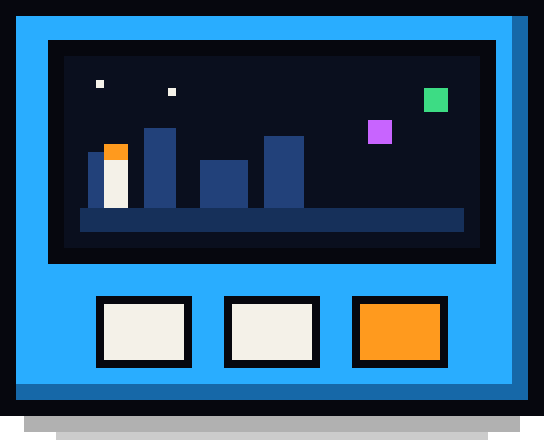
Colour touch screen, speaker, ten lights, Wi-Fi, a battery base. Set up and tested by us before your child's first session.
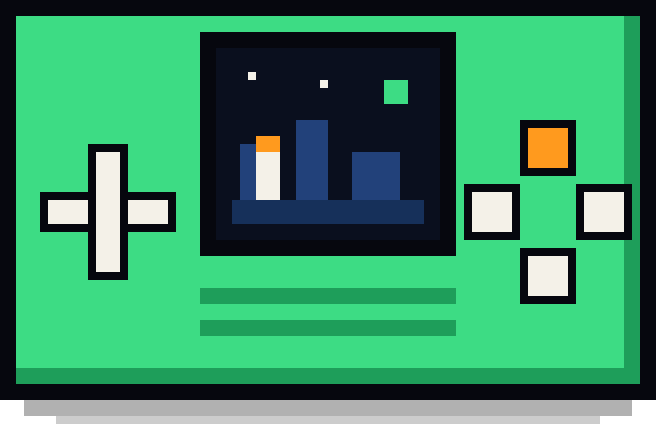
Two or three games of their own design, running on their own machine.

Notes, typing, a quiz machine and an AI terminal that goes online.

A calculator they can open up, and a profit calculator for a real product.
No browser, no app store, no short videos one tap away. The only things on it are the games, the word machine and the calculator your child built, so the time goes into making.
Real Python on a real computer. Every session packs in a coding idea, the maths or science behind it and an AI skill, each building on the last: from algorithms and gravity to probability and secret codes.
Your child builds the calculator, the graph machine and the talking spelling machine they practise on, and keeps using them after camp.
This is the real starting software — the same Python that runs on the machine, running here in your browser. Switch faces with the buttons under it.
Works in Chrome, Edge, Firefox and Safari. Use your arrow keys, Z and X — or tap the buttons.
This is a creation camp. Each session teaches one skill for building with an AI crew, takes apart one example game, and then your child designs and builds a game of their own. A bronze, silver and gold goal means a beginner and a confident coder both finish the day with something they are proud of. Open a session to see it.
Not a login to a website. The machine, all three faces and every program your child wrote are theirs — switch it on at school and the games are still there.
A vague design card gets questions, not code. A fix needs a proper bug report. The numbers that make it work are tuned by hand. Using AI well is the skill; letting it think for you is not allowed.
A portfolio page shows every program, every bug your child found, and how many lines they changed by hand — the part the AI did not do.
Families play the machines and every child gives a 90-second demo of all three modes.
In person, at most 6 a class. A private tutor is A$55–85 an hour.
The AI build crew in class and at home, free to use for the 120 days. No extra fees.
Your child keeps creating on their own at home, and can bring their questions to us.
Cancel any time: we refund the sessions not used.
Hourly rates: Tutero (maths tutoring) and Manhattan Music Melbourne (one-on-one lessons), 2025. A$50 = (A$1,080 − A$180 machine) ÷ 18 hours.
Questions? wcandy@candyandfrank.com · 0421 101 835 · WeChat candyandfrank
Paying books the place, one child at a time: to book a brother or sister, fill this in again with the same email and their tuition is 10% off. You pay on Stripe's secure page.
About the camp, the machine or Maker Club: write here. We read every message and reply by email.